Living in Koh Samui: The Complete Expat Neighborhood Guide (2026)
Koh Samui is one of the easiest places in Thailand to imagine yourself living — and one of the easiest places to misunderstand if you don’t look past the postcard version.
At first glance, Samui feels like a resort island that accidentally became livable. There’s an international airport, multiple private hospitals, proper supermarkets, international schools, and a surprisingly mature expat ecosystem. You can land, rent a villa, and be functioning within days. For many people, that alone puts Samui ahead of other Thai islands.
But living here long-term is not the same as holidaying here, and Samui rewards people who choose it deliberately rather than emotionally.
This is an island built around convenience wrapped in paradise. You can wake up near the beach, work remotely with fast fiber internet, train at a serious gym, eat well, and still be home before the heat peaks. Daily life can feel calm, rhythmic, and grounded — especially compared to Bangkok or Phuket. For couples, families, and long-term expats who value routine over stimulation, that’s the real draw.
At the same time, Samui has friction points that don’t show up in Instagram reels.
Transport is one of them. Taxis are expensive and unreliable, and most long-term residents eventually accept that a scooter or car isn’t optional — it’s part of the deal. Infrastructure exists, but it’s still island infrastructure: power cuts happen, water pressure can drop, and logistics always take longer than you expect. Flights off the island are expensive, and leaving Samui often feels harder than arriving.
Samui also isn’t one place — it’s a collection of very different pockets stitched together by a ring road. Choosing the wrong area can quietly ruin the experience. Live too close to Chaweng and the noise and traffic wear thin fast. Live too far west or south and daily errands become a grind. People who love Samui long-term almost always credit one thing: they picked the right neighborhood for their lifestyle.
This guide is written for people who are considering Koh Samui as a place to live, not just visit.
It’s for retirees who want comfort without chaos.
For remote workers who want a slower pace but still need reliability.
For couples and families looking for space, routine, and community.
And for the largest real audience on Samui: single expats 45+ who are choosing the island for lifestyle and want a realistic read on community, dating, and nightlife without the usual tourist fluff.
The goal isn’t to sell you paradise — it’s to help you decide if Samui will actually work for you once it becomes normal life.
<aside> 🧭
How to Use This Guide (Expat Decision Mode)
- Choose your base first (neighborhood). That decision controls 80% of your experience.
- If you want a social/dating life, treat Bophut as your “easy mode” and Chaweng as your “high energy zone” (great to visit, not always great to live inside).
- If you want peace, you can still go out — but don’t make yourself do a 35-minute drive home after midnight every weekend.
- Rent short-term in 1–2 areas before committing. Samui looks small on a map, but it doesn’t live small. </aside>
In the sections that follow, we’ll break down how the island actually works day to day, which areas suit which lifestyles (including social/dating reality), and what living here really costs — financially and emotionally — once the honeymoon period wears off.
Understanding Koh Samui's Layout
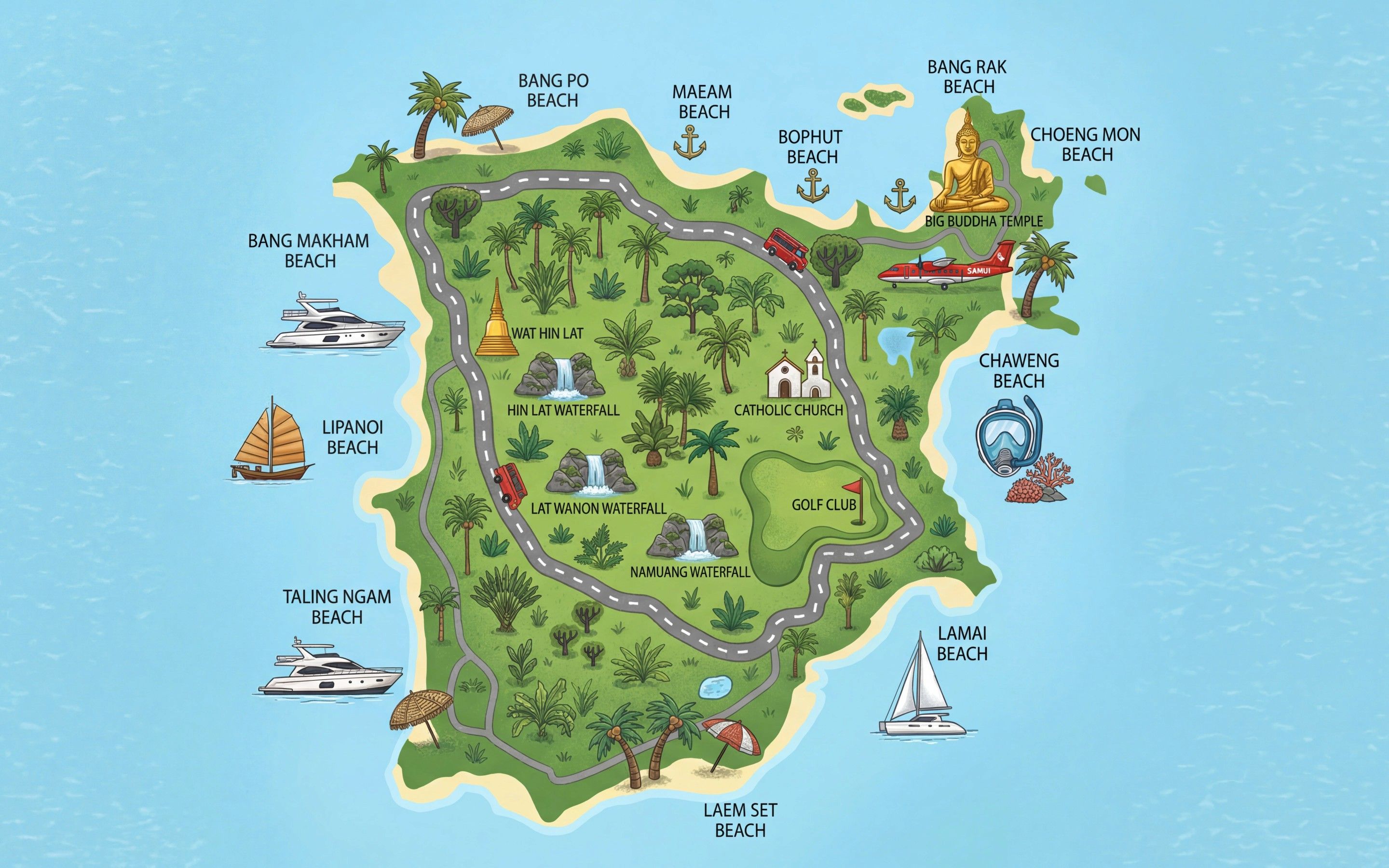
To understand Koh Samui, you have to stop thinking of it like a compact island and start thinking of it like a ring with very different villages attached to it.
Samui is built around a single coastal ring road that loops the island. Everything — schools, hospitals, supermarkets, beaches, cafés, gyms — sits either on this road or just off it. The mountainous interior is mostly undeveloped jungle, which means there are very few true “shortcuts” across the island. On a map, distances look small. In real life, they rarely feel that way.
This layout shapes daily life more than most people expect.
Where you live determines how easy or frustrating your routines become. A 15-kilometer drive on Samui can be effortless or exhausting depending on traffic, road quality, hills, and time of day. Morning school runs, hospital visits, grocery shopping, gym sessions — all of it compounds if you choose the wrong base.
As a general rule, the north and northeast of the island carry most of the long-term expat infrastructure. This is where you’ll find the highest concentration of international schools, private hospitals, large supermarkets, coworking spaces, and long-stay villas. (For school details: ISS, PBISS, and Windfield.) It’s also where the airport sits, which matters more than people realize once flights become part of regular life.
The east coast — particularly Chaweng — is the island’s commercial and nightlife engine. It has the biggest mall, the densest retail, and the most energy, but also the heaviest traffic, noise, and tourism pressure. Many expats visit Chaweng weekly without wanting to live there.
Move south and west, and Samui slows down dramatically. Lamai offers a more balanced “second hub” feel, while areas like Lipa Noi and Taling Ngam trade convenience for space, sunsets, and quiet. These areas can be deeply appealing — but only if you’re comfortable driving for almost everything.
One of the biggest mistakes newcomers make is choosing accommodation based on beach photos alone. A beautiful villa loses its charm quickly if every errand feels like a mission. Long-term residents talk far more about logistics than scenery: road access in the rain, power reliability, proximity to hospitals, and how painful high season traffic becomes on certain stretches of road.
Seasonality also changes how the island moves. During peak months, the ring road between Fisherman’s Village and Chaweng can feel permanently congested. In the rainy season, flooding in low-lying areas — particularly around Lamai — can temporarily cut off routes entirely. Locals learn the back roads early; newcomers often don’t.
The takeaway is simple but critical:
Samui is easy to love and hard to adapt to if you choose your area casually.
<aside> 🗺️
Quick Match — Find Your Neighborhood
- Best for families → Choeng Mon or Bophut
- Best for remote workers → Maenam
- Best for social life & expat community → Bophut
- Best on a budget → Maenam or Nathon
- Best balance of facilities & calm → Lamai
- Best for retirees → Choeng Mon or Lipa Noi
- Best for short-term / nightlife access → Chaweng
- Best for logistics & island access → Bangrak / Plai Laem </aside>
Living Zones & Neighborhood Profiles
Bophut & Fisherman's Village — Best for Expat Community & Social Life
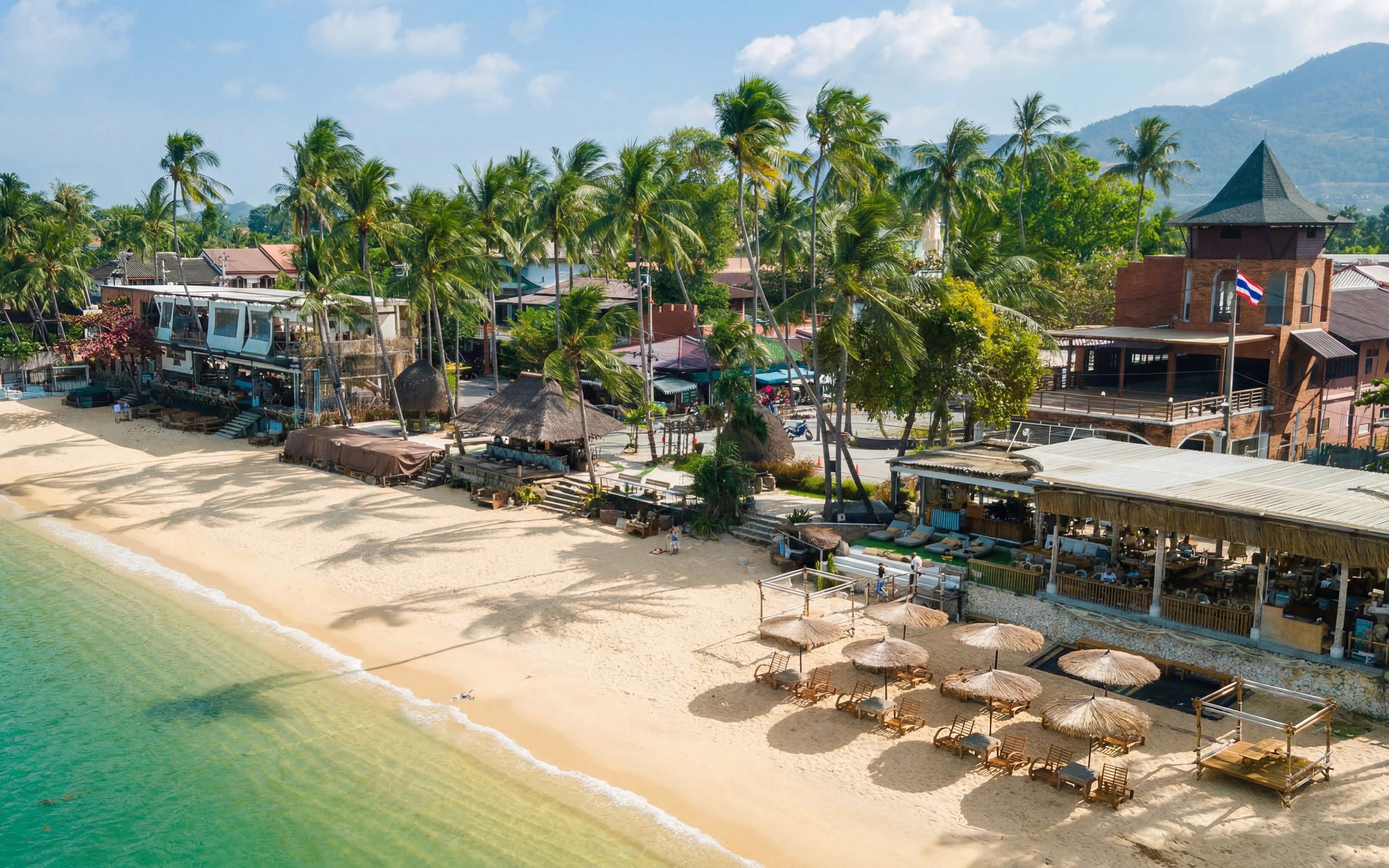
If Koh Samui has a social center of gravity for long-term expats, this is it.
Bophut — particularly the area around Fisherman’s Village — is often described as “grown-up Samui.” It’s not quiet, not wild, and not trying too hard. For many people, this is where Samui feels the most livable over time.
The Vibe
Bophut blends old wooden shopfronts, beachfront restaurants, cafés, gyms, and residential streets into something that feels village-like rather than resort-driven. Fisherman’s Village gives the area a walkable spine — rare on Samui — and creates a sense of place that’s missing in more scattered parts of the island.
There’s always something happening, but it rarely tips into chaos outside of peak tourist nights.
Who This Area Suits
- Couples who want an active social life without party energy
- Families needing proximity to international schools and services
- Long-term expats who value convenience and community over isolation
People who like to “pop out” for dinner, coffee, or a walk without planning a drive tend to settle here.
What Daily Life Actually Looks Like
Living in Bophut means routines are easy. Morning walks along the beach or through the village, gym sessions close to home, casual café meetings, and short drives to supermarkets or the airport. It’s one of the few areas where you can genuinely reduce how often you need your scooter or car.
Friday nights are busy due to the Fisherman’s Village market, and Sunday evenings can feel congested, but mid-week life is relaxed and predictable.
A few real anchors help this area feel more specific: SUMMER by Coco Tam’s works for the polished brunch and laptop crowd, Coco Tam’s is the obvious sunset-social default, and The Coffee Club – Bophut is the kind of reliable Western fallback expats actually use rather than just recommend. If you’re raising kids, this side of the island also benefits from fast access to schools like ISS and the rest of the northeast family infrastructure.
Pros
- Best dining variety on the island
- Walkable pockets (rare for Samui)
- Strong expat and family community
- Close to the airport, schools, and hospitals
Cons
- More expensive than Maenam or Lamai
- Traffic spikes on market nights
- Beach quality is debated compared to other areas
Property Snapshot (Long-Term Rentals)
- 1-bed apartments: 12,000–22,000 THB / month (~$350–$650 USD/month)
- 2–3 bedroom villas: 35,000–70,000 THB / month (~$1,030–$2,060 USD/month)
- Gated or sea-view properties push higher
Prices reflect demand — Bophut holds value well and discounts are limited in high season.
Local Insight
Bophut works because it feels social without being transient. Many expats who start elsewhere on the island eventually migrate here once they want stability and ease rather than novelty.
The trade-off is price — but for many, the reduction in daily friction is worth it.
Pro TipIf you want the atmosphere without the crowds, look slightly inland or toward the western edge of Bophut. You’ll still be minutes from Fisherman’s Village, but with far less noise and traffic during peak nights.
Bangrak & Plai Laem — Best for Logistics, Access & Value
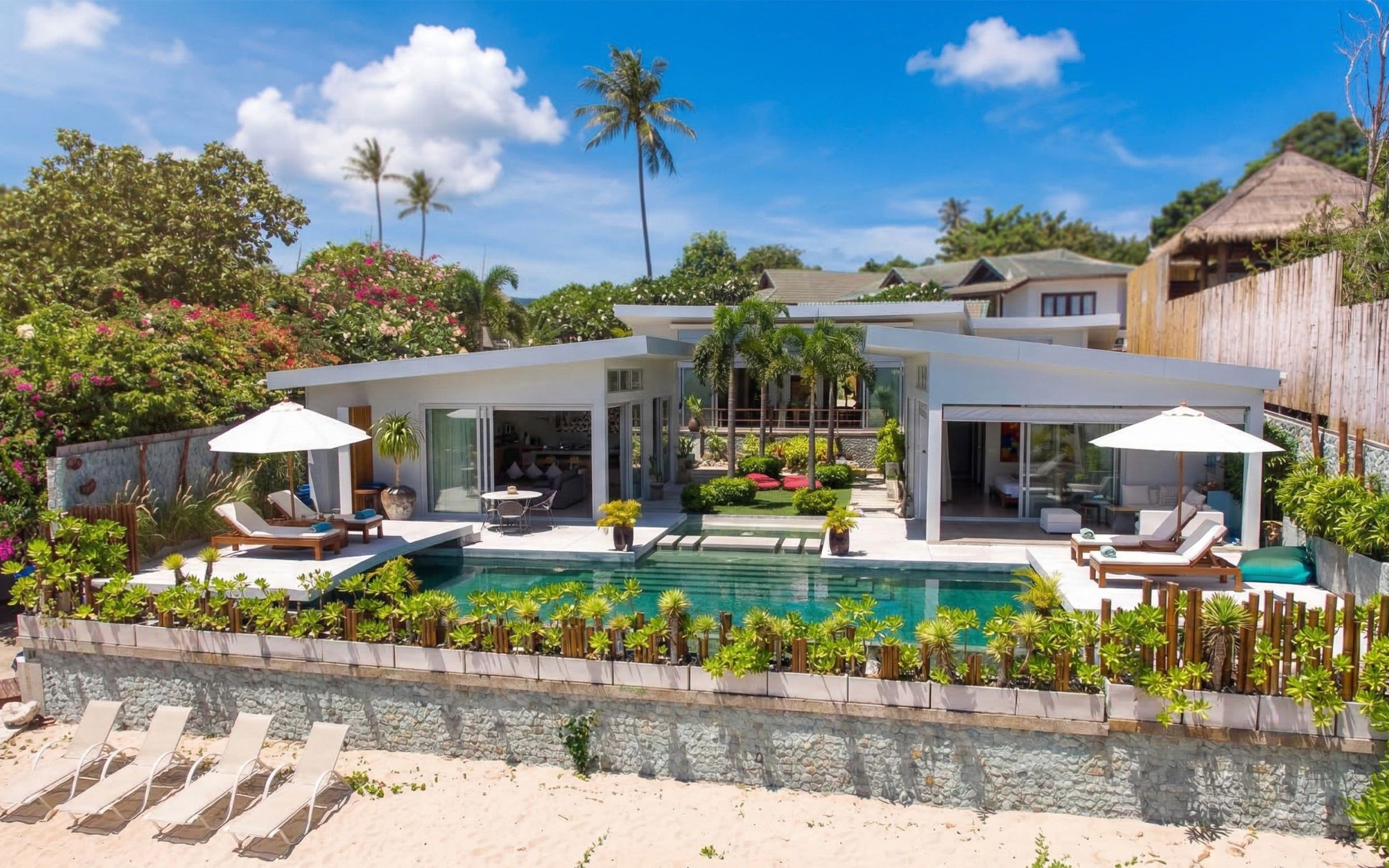
Bangrak and Plai Laem sit just east of Bophut and often get overlooked — not because they’re bad places to live, but because they prioritize logistics over lifestyle polish.
For the right person, that’s exactly the appeal.
The Vibe
This part of the island feels functional rather than romantic. You’re close to the airport, ferries, marinas, and major roads. There are temples, local markets, gyms, long-stay villas, and a growing number of low-key bars and restaurants — but very little in the way of curated village atmosphere.
Plai Laem is quieter and more residential. Bangrak is busier, more mixed, and visibly local in parts.
Who This Area Suits
- Expats who value convenience and mobility
- Boat owners or frequent island-hoppers
- Budget-conscious long-term residents
- People who don’t need a “pretty” beach outside their door
If your priority is access rather than aesthetics, this zone makes sense.
What Daily Life Actually Looks Like
Living here means short drives to everywhere that matters. Airport runs are painless. Grocery trips are quick. Visiting Bophut, Chaweng, or Choeng Mon is easy in either direction. Many residents structure their lives around efficiency rather than scenery.
Beach time happens, but it’s not the focal point. Most people here drive to swim elsewhere.
The upside is functional local infrastructure. Plaza The Green in Bangrak gives this side of the island a more local-feeling night-market option than Fisherman’s Village, the Big Buddha (Wat Phra Yai) and nearby piers make island-hopping easy, and people who live here tend to know exactly which route gets them to Bophut, Chaweng, or the airport fastest. The downside is equally real: some streets sit directly under flight paths, so this is one of the few areas where two viewings at different times of day can give you two completely different impressions.
Pros
- Excellent island-wide access
- Generally better value for money
- Proximity to ferries and airport
- Less tourist-driven than Chaweng
Cons
- Aircraft noise in some pockets
- Beaches are functional, not spectacular
- Less walkability and atmosphere
Property Snapshot (Long-Term Rentals)
- 1-bed apartments: 10,000–18,000 THB / month (~$295–$530 USD/month)
- 2–3 bedroom villas: 25,000–55,000 THB / month (~$735–$1,620 USD/month)
- Good availability of standalone houses
This is often one of the better areas for negotiating longer-term deals.
Local Insight
Bangrak and Plai Laem attract people who already understand Samui. It’s rarely anyone’s first choice — but it’s often where people land once they realize how much logistics matter on an island.
It’s not charming, but it works.
Pro TipCheck flight paths carefully before signing a lease. Two streets apart can mean the difference between barely noticing planes and hearing them daily.
Choeng Mon — Best for Families & Quiet Beach Living
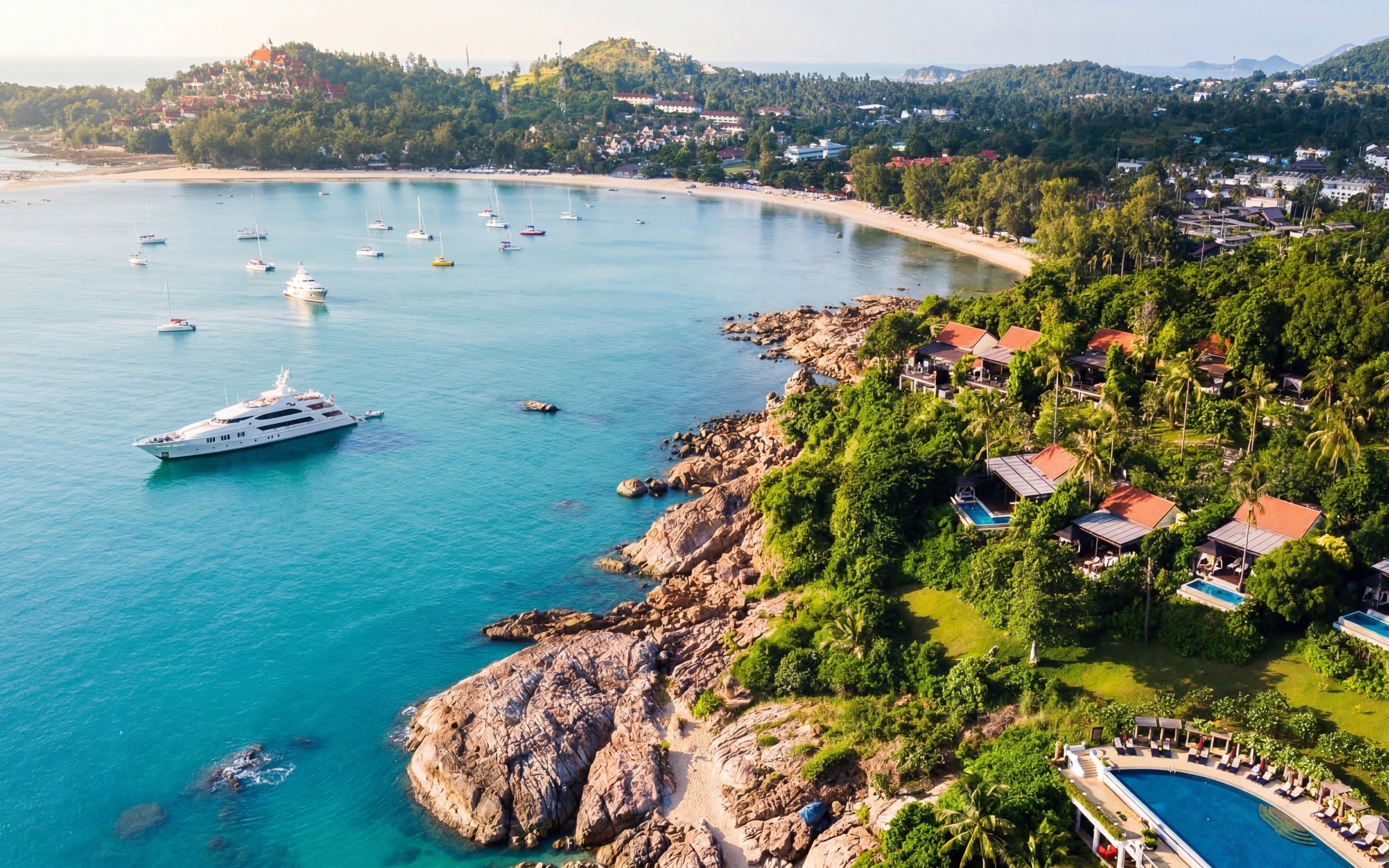
Choeng Mon sits on the northeastern tip of the island and is often described as the “polished” side of Samui — quieter, cleaner, and more deliberately designed than most surrounding areas.
It’s not a place people stumble into. Most who live here choose it intentionally.
The Vibe
Choeng Mon feels calm and well-kept. Beaches are smaller and more sheltered, the water is generally good for swimming, and much of the area is shaped by higher-end resorts and private villas. There’s very little nightlife, and almost no backpacker energy.
It’s peaceful without being remote.
Who This Area Suits
- Families with young children
- Retirees who want comfort and quiet
- Couples who value calm over social buzz
- Anyone prioritizing beach quality and safety
If noise, crowds, or unpredictability drain you, Choeng Mon tends to feel reassuring.
What Daily Life Actually Looks Like
Daily life here is low-stimulus. Morning beach walks, home workouts, school runs, quiet cafés, and early evenings. Social life happens, but it’s usually planned rather than spontaneous.
You’re close to the airport, Bophut, and Bangrak, which keeps errands manageable — but you won’t find many reasons to stay out late locally.
This is also where Samui starts to feel like quiet wealth rather than broad expat bustle. Beaches around Choeng Mon and nearby Thongson Bay are a big part of the appeal: calmer water, cleaner feel, and far less foot traffic than Chaweng. That’s exactly why some retirees and young families shortlist this corner early and never really leave it.
Pros
- One of the best swimming beaches on the island
- Clean, quiet, and family-friendly
- Close to schools and the airport
- Strong sense of privacy
Cons
- More expensive than most areas
- Minimal street life or nightlife
- Car or scooter required for almost everything
Property Snapshot (Long-Term Rentals)
- 1-bed apartments: 15,000–30,000 THB / month (~$440–$880 USD/month)
- 2–3 bedroom villas: 40,000–100,000 THB / month (~$1,175–$2,940 USD/month)
- Many properties are resort-style or gated
Quality is high, but you pay for it.
Local Insight
Choeng Mon attracts people who already know what they don’t want. Very few residents here are chasing excitement — they’re chasing consistency.
It’s an easy area to love if you’re at the right stage of life, and an easy area to feel bored if you’re not.
Pro TipIf you want Choeng Mon calm without peak pricing, look slightly inland rather than beachfront. You’ll still be minutes from the beach, but with significantly better value.
Maenam — Best for Remote Workers & Long-Term Budget Living
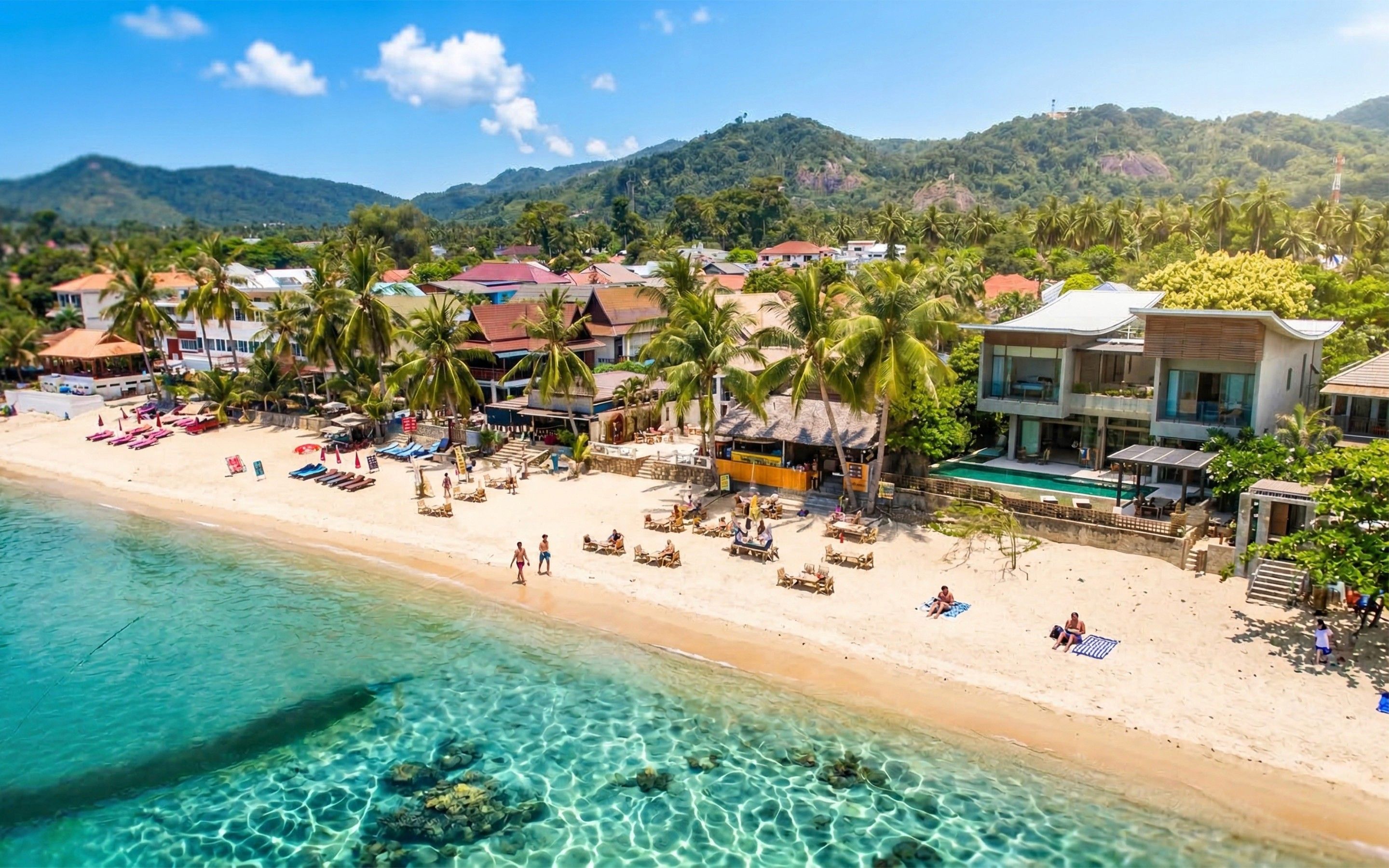
Maenam is where many people fall in love with the idea of Samui as a long-term home — and where plenty of them end up staying.
It’s quieter than Bophut, less intense than Chaweng, and more grounded than the resort-heavy northeast.
The Vibe
Maenam feels like a real village. There’s a long, relaxed beach, low-rise development, morning markets, and a noticeably slower pace. It’s not polished, but it’s authentic, and that’s exactly why people choose it.
This is one of the island’s strongest long-stay zones.
Who This Area Suits
- Remote workers and digital nomads
- Long-term expats prioritizing calm and routine
- Budget-conscious residents
- People comfortable trading nightlife for space
If you like structure, quiet mornings, and fewer distractions, Maenam fits well.
What Daily Life Actually Looks Like
Life here revolves around routine. Early beach walks, gym sessions, working from home or cafés, market shopping, and evenings that wind down early. There’s a strong sense of rhythm, especially among long-term residents.
You’ll drive for major shopping or social events, but daily essentials are close enough to stay easy.
The useful specifics here matter. Maenam Morning Market is where people actually buy produce, the island’s immigration office nearby is known for being stricter on dress code than many newcomers expect, Oonrak gives families a credible bilingual school anchor, and Explorar gives remote workers a resort-style option when working from home starts feeling too repetitive. Push a little further west into Bang Por and places like The Vibe Samui and 4 Monkeys Coffee Bar explain why long-stayers keep calling that stretch underrated.
Pros
- Generally better value for money
- Strong expat community
- Calm, uncrowded beach
- Good base for remote work
Cons
- Limited nightlife and dining variety
- Less walkability than Bophut
- Can feel too quiet for some
Property Snapshot (Long-Term Rentals)
- 1-bed apartments: 8,000–15,000 THB / month (~$235–$440 USD/month)
- 2–3 bedroom villas: 20,000–50,000 THB / month (~$590–$1,470 USD/month)
- Plenty of Thai-style houses and garden villas
This is one of the island’s most competitive value zones.
Local Insight
Maenam attracts people who are finished experimenting. Many residents here tried other parts of Samui first and settled once they found a pace that matched their energy.
It’s rarely described as exciting — but it’s often described as sustainable.
Pro TipCheck internet quality and water pressure before committing. Most places are fine, but reliability matters more here if you work remotely.
Chaweng & Chaweng Noi — Best for Short-Term Residents & Nightlife Access
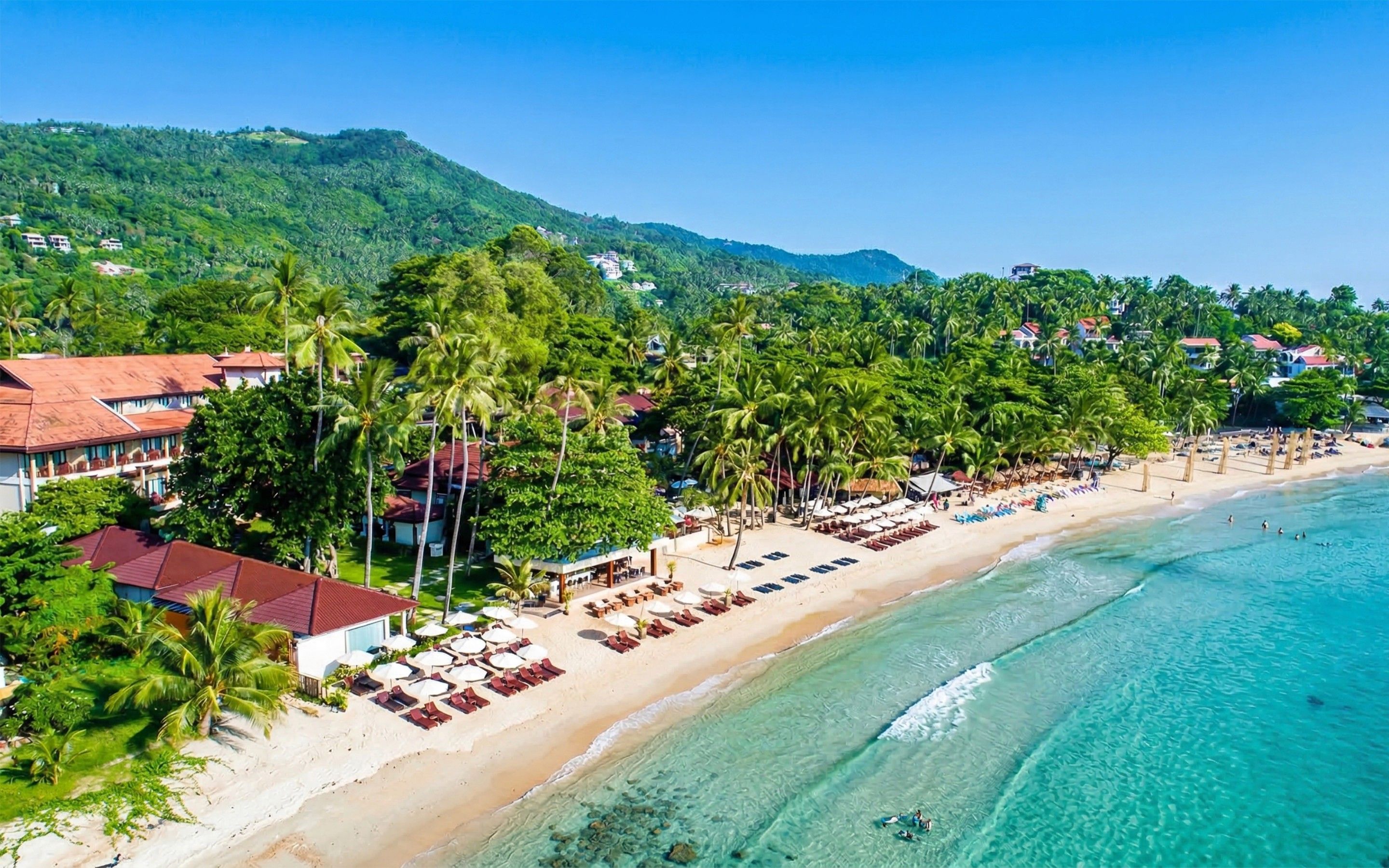
Chaweng is the engine room of Koh Samui — and the area most people associate with the island, for better or worse.
It’s also the area long-term expats are most divided on.
The Vibe
Chaweng is busy, loud, and unapologetically tourist-driven. This is where the biggest mall, the densest retail, and the island’s nightlife cluster live. Music runs late, traffic builds early, and energy never fully drops.
Chaweng Noi, just south of the main strip, softens this intensity slightly, offering pockets of quieter living while still being close to the action.
Who This Area Suits
- Short- to mid-term residents
- Social expats who enjoy nightlife
- People who want everything close by
- Those without kids or early mornings
If stimulation energizes you, Chaweng delivers.
What Daily Life Actually Looks Like
Living in Chaweng means convenience at the cost of calm. Grocery shopping, gyms, clinics, and cafés are all minutes away — but noise and congestion are constant companions.
Many residents live slightly inland or toward the northern or southern edges to buffer the chaos.
The reason expats still keep Chaweng in their weekly loop is simple: Central Samui, Tops Food Hall, Desk+Chair for proper coworking, and some of the island’s most convenient clinic and hospital access, including Wattanapat Hospital Samui and Samui International Hospital. That makes Chaweng useful even for people who never want to live in the middle of it.
Pros
- Central Festival mall and best retail access
- Wide dining and nightlife options
- Short drives to most services
- Strong rental demand
Cons
- Noise, traffic, and crowds
- Seasonal flooding in low-lying areas
- Fatigue sets in for long-term residents
Property Snapshot (Long-Term Rentals)
- 1-bed apartments: 15,000–25,000 THB / month (~$440–$735 USD/month)
- 2–3 bedroom villas: 30,000–80,000 THB / month (~$880–$2,350 USD/month)
- Prices vary wildly by street and elevation
Views and distance from the strip matter more here than anywhere else.
Local Insight
Many people love Chaweng at first and leave within a year. It’s exciting, efficient, and draining in equal measure.
Those who stay long-term usually carve out quiet pockets and treat Chaweng as a convenience hub rather than a lifestyle center.
Pro TipIf you plan to live here, prioritize soundproofing and drainage over aesthetics. Rain and noise are the two factors most likely to wear you down.
Lamai — Best for Balance, Fitness & Long-Term Couples
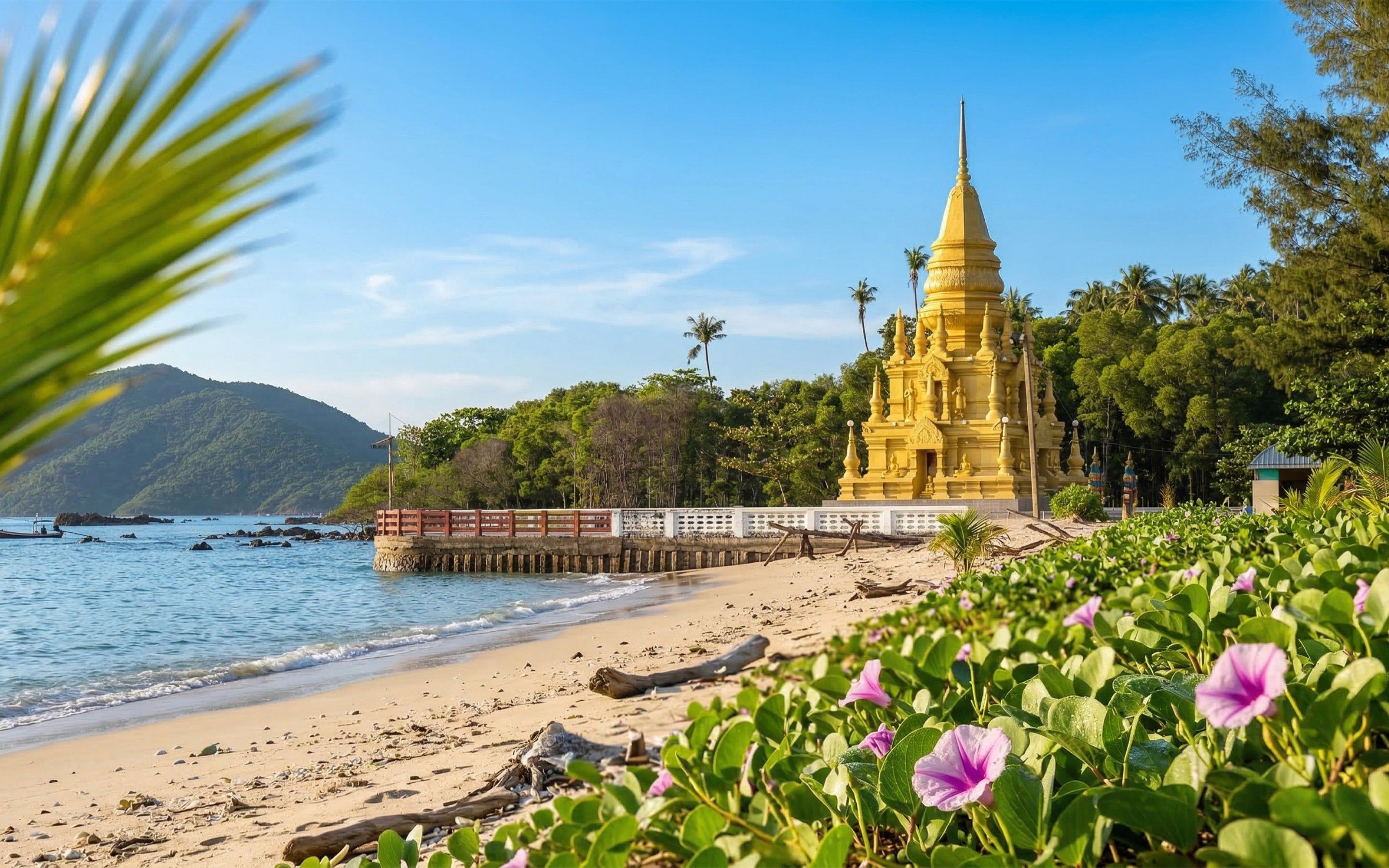
Lamai is often described as the place people should look at before committing to Chaweng — and for many long-term expats, it ends up being the better call.
It offers structure and services without the constant pressure of tourism.
The Vibe
Lamai feels like a second hub rather than a spillover. There’s enough going on to feel alive, but not so much that it overwhelms. Markets, gyms, cafés, and restaurants are spread out rather than compressed, giving the area room to breathe.
It’s less polished than Bophut and less intense than Chaweng — comfortably in the middle.
Who This Area Suits
- Long-term couples
- Fitness-focused expats
- People who want facilities without chaos
- Those planning to stay more than a season
Lamai attracts people who want balance rather than novelty.
What Daily Life Actually Looks Like
Life in Lamai is practical. Morning gym sessions, market shopping, quiet workdays, and social evenings that don’t revolve around clubs. There’s enough choice to avoid boredom, but routines form quickly.
You’ll drive or scooter most places, but distances are manageable.
Lamai also has more real-life anchors than generic guides usually admit. Koh Fit and Lamai Fitness reinforce its reputation as a training-friendly part of the island, Lama Cafe gives remote workers a known laptop base, Makro makes bulk grocery runs more practical from this side of Samui, and Windfield adds another schooling consideration for families comparing north versus south-east living.
Pros
- Strong fitness and wellness scene
- Good dining variety at reasonable prices
- Less tourist pressure than Chaweng
- Solid long-term community
Cons
- Flooding during heavy rainy seasons
- Less walkability than Bophut
- Beach quality varies by section
Property Snapshot (Long-Term Rentals)
- 1-bed apartments: 10,000–20,000 THB / month (~$295–$590 USD/month)
- 2–3 bedroom villas: 25,000–60,000 THB / month (~$735–$1,765 USD/month)
- Good supply of mid-range housing
Lamai often offers better value than Bophut for similar living space.
Local Insight
Lamai tends to retain people. Expats who settle here often stay longer than expected because daily life feels workable rather than effortful.
It doesn’t shout for attention — and that’s its strength.
Pro TipAsk locals about flooding history before signing a lease. Two properties on the same road can have very different experiences during the wet season.
Nathon
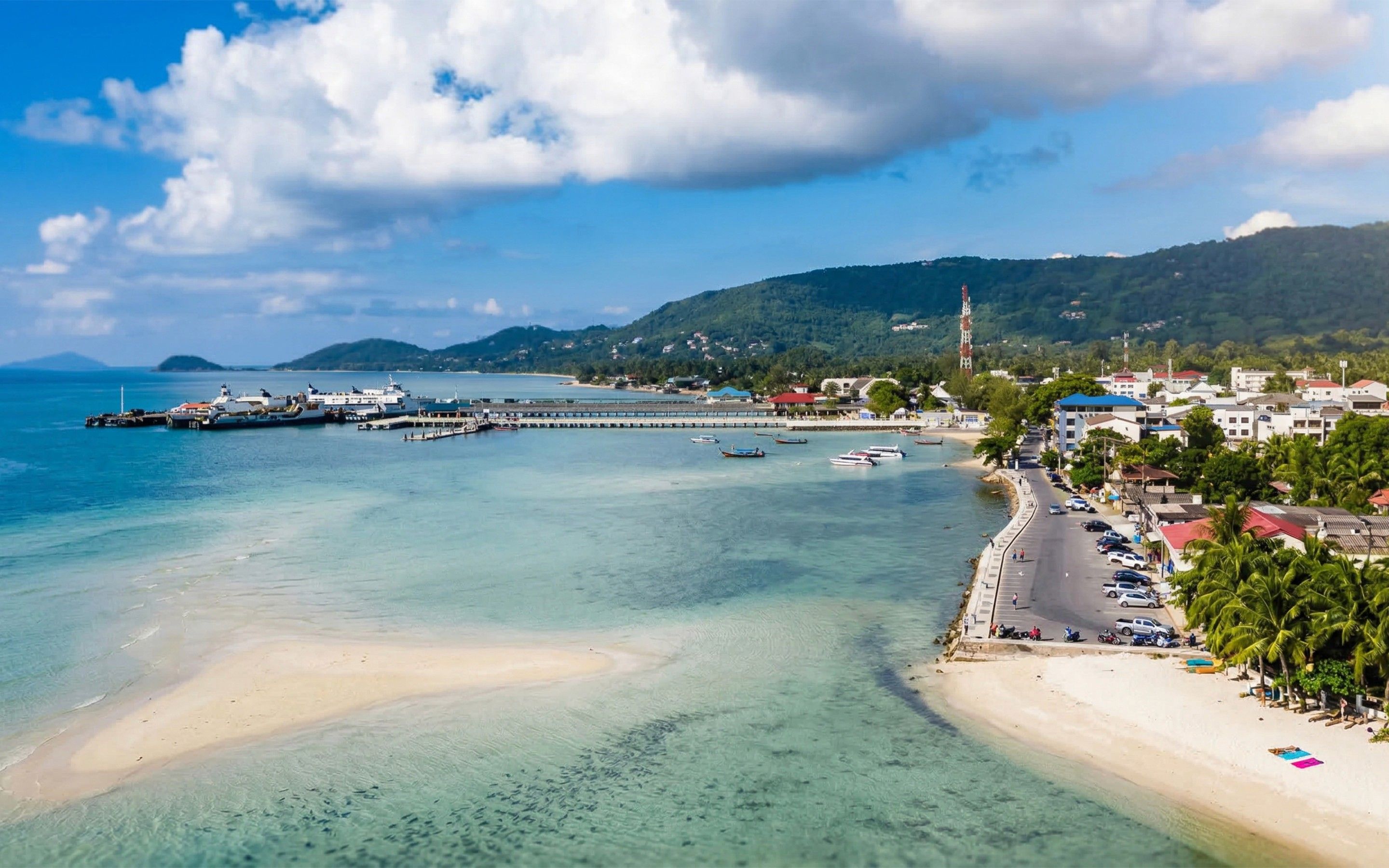
Nathon is the administrative and working heart of Koh Samui — and the least “island dream” part of the island.
That’s not a criticism. It’s just the truth.
The Vibe
Nathon feels Thai-first. Ferries come and go, government offices operate here, local markets serve locals, and daily life feels functional rather than curated. There’s very little resort energy and almost no nightlife aimed at tourists.
This is Samui stripped of performance.
Who This Area Suits
- Long-term expats who prioritize practicality
- People handling regular immigration or government errands
- Budget-focused residents
- Those who don’t need beach living as a daily feature
If you value efficiency over aesthetics, Nathon can work surprisingly well.
What Daily Life Actually Looks Like
Life here revolves around errands and routine. Immigration visits, ferry trips to the mainland, local shopping, and straightforward dining. Social life tends to be quiet and local.
Beach time usually means driving elsewhere.
Pros
- More affordable housing
- Access to ferries and government services
- Strong local markets and Thai food
- Less tourist pressure
Cons
- Limited nightlife or social scene
- Beach is not a drawcard
- Feels utilitarian compared to other areas
Property Snapshot (Long-Term Rentals)
- 1-bed apartments: 8,000–15,000 THB / month (~$235–$440 USD/month)
- 2–3 bedroom houses: 18,000–45,000 THB / month (~$530–$1,325 USD/month)
- Good availability of simple, spacious homes
This is one of the island’s better-value zones for space.
Local Insight
Most people don’t choose Nathon first — but some end up appreciating it once novelty fades. It’s functional, grounded, and predictable.
For the right person, that’s a relief.
Pro TipIf you live in Nathon, plan your social and beach life intentionally. This area works best when you’re comfortable separating “home base” from leisure.
Lipa Noi & Taling Ngam — Best for Retirees & Total Quiet
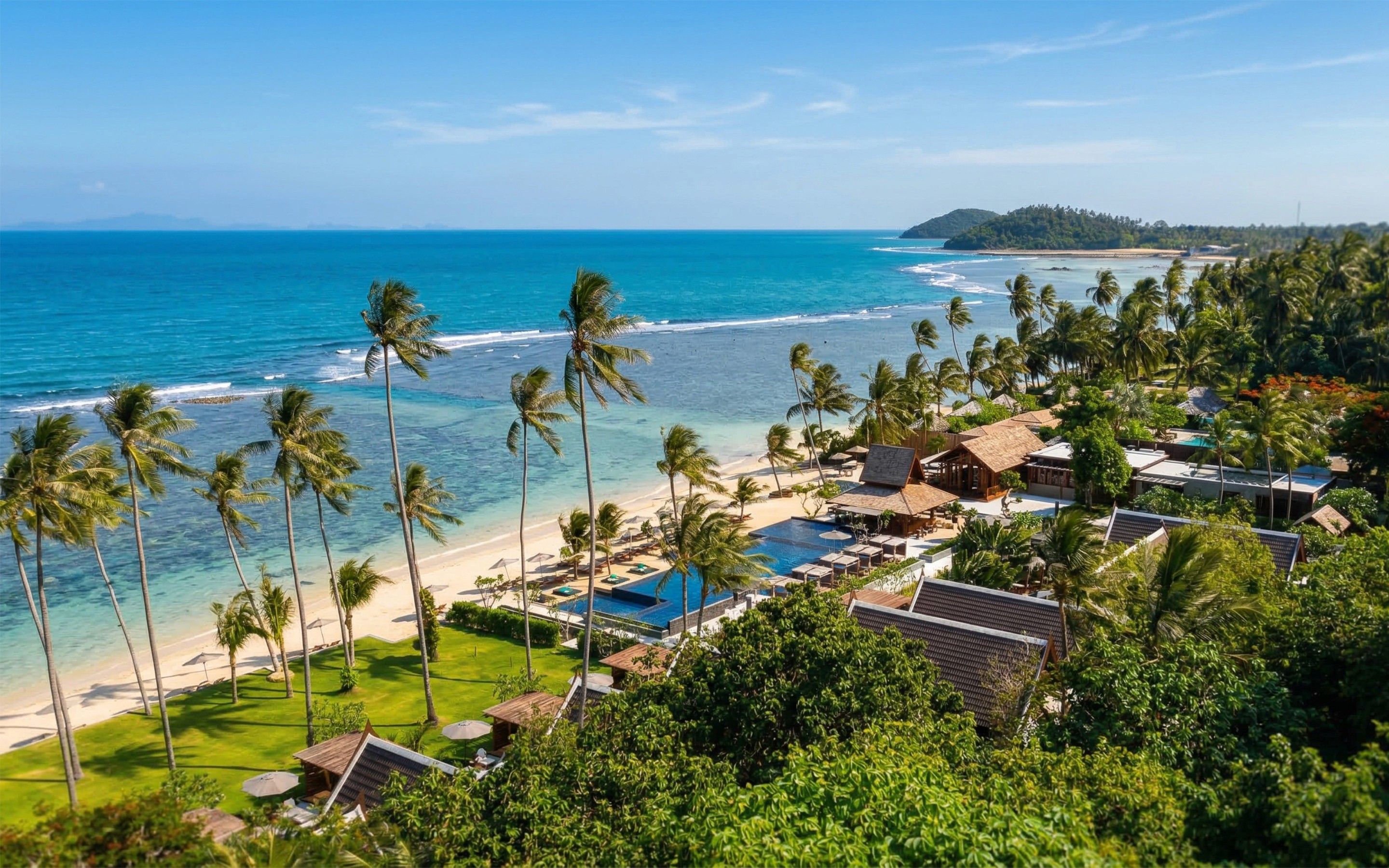
Lipa Noi and Taling Ngam sit on the western and southwestern edge of Koh Samui and represent the island at its quietest.
This is where people come to slow things down — sometimes radically.
The Vibe
These areas feel removed from the rest of Samui. Development is sparse, traffic is light, and sunsets are among the best on the island. Life here is shaped by space, sea, and silence rather than schedules.
There’s very little commercial activity, and that’s intentional.
Who This Area Suits
- Retirees
- Writers, creatives, and remote workers seeking isolation
- Couples prioritizing peace over access
- Long-term residents finished with island exploration
If you want stimulation, this isn’t it. If you want calm, it’s hard to beat.
What Daily Life Actually Looks Like
Daily life is slow and self-contained. Mornings are quiet, days are planned, and evenings revolve around home rather than social venues. Most errands require driving, and spontaneity gives way to routine.
Many residents here rarely leave their immediate area unless necessary.
Pros
- Stunning sunsets
- Low noise and minimal tourism
- More space for the price
- Strong sense of privacy
Cons
- Long drives to services and hospitals
- Limited dining and social options
- Can feel isolating long-term
Property Snapshot (Long-Term Rentals)
- 1-bed houses/apartments: 10,000–18,000 THB / month (~$295–$530 USD/month)
- 2–3 bedroom villas: 25,000–60,000 THB / month (~$735–$1,765 USD/month)
- Sea-view properties common
Prices reflect remoteness more than quality.
Local Insight
People who thrive here usually already know they don’t need much. For everyone else, the isolation can creep up slowly.
This is Samui for people who want fewer decisions, fewer interactions, and fewer distractions.
Pro Tip
Test this area before committing long-term. A one-month stay can reveal whether peace feels grounding or lonely.
Property & Cost Reality
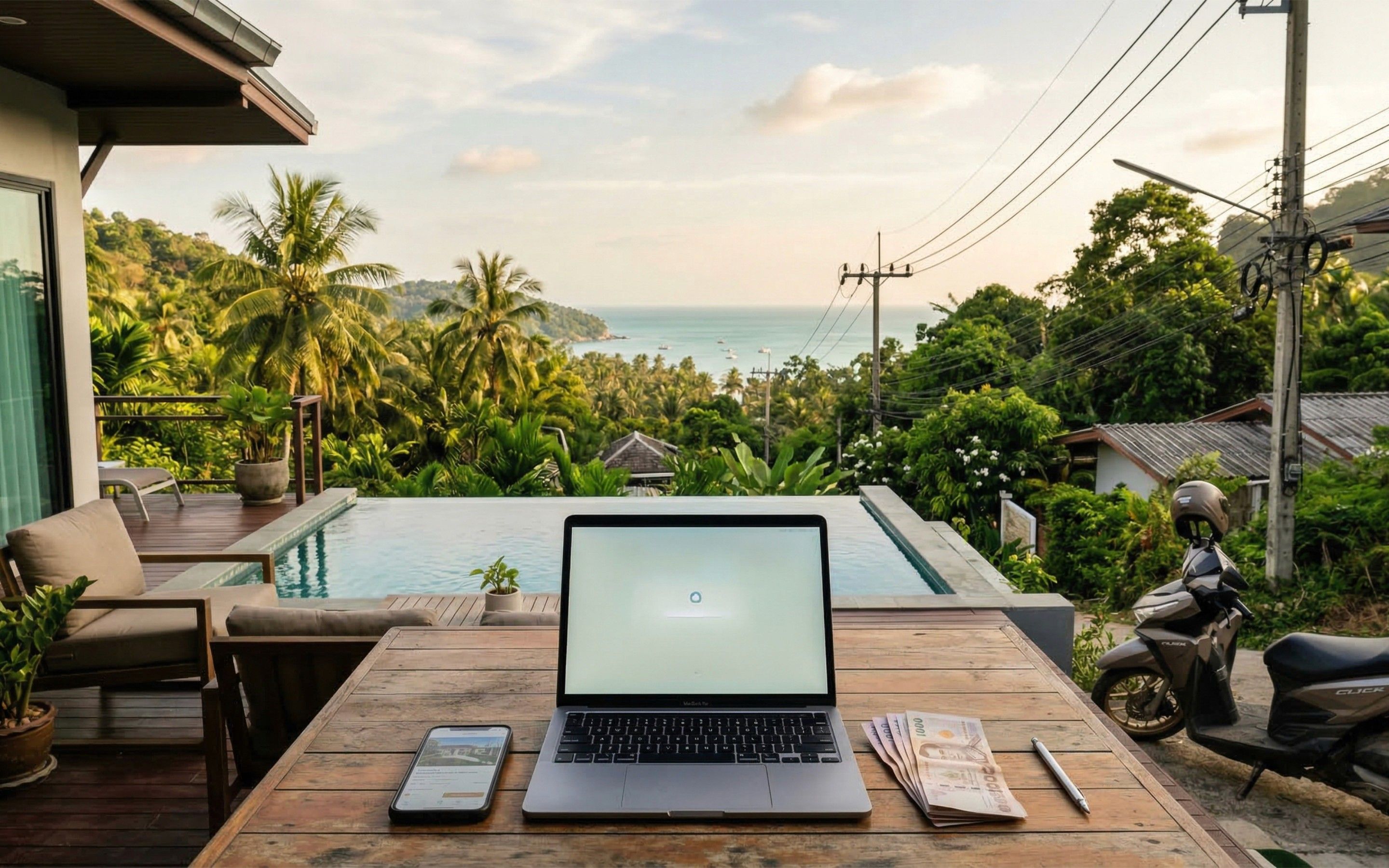
Koh Samui is often described as “affordable island living,” and that’s only half true.
It can be affordable — but only if you understand how pricing actually works here and where costs quietly escalate over time.
Rental Pricing: What’s Realistic
Long-term rental prices on Samui vary dramatically by location, season, and negotiation skill. Beach photos don’t tell you much; access, elevation, and infrastructure matter more.
As a rough long-term baseline:
- Studios / 1-bed apartments: 8,000–25,000 THB / month (~$235–$735 USD/month)
- 2–3 bedroom houses or villas: 20,000–70,000 THB / month (~$590–$2,060 USD/month)
- Higher-end villas: 80,000 THB+ / month (~$2,350+ USD/month)
Six- and twelve-month leases offer the best value. Shorter stays are priced aggressively, especially between December and April.
Utilities & Hidden Costs
This is where expectations often break.
- Electricity: Government rate is ~4.5 THB/unit, but many rentals charge 7–9 THB/unit. Heavy air-conditioning can push bills far higher than expected.
- Water: Cheap when government-supplied; more expensive if trucked in during dry months.
- Internet: Usually fast and reliable, but not always included.
- Extras: Pool cleaning, gardening, and weekly cleaning are often billed separately.
Power outages and water pressure issues aren’t constant, but they’re common enough to matter — especially if you work from home.
A very Samui-specific cost that catches people off guard is the Bangkok Airways premium. Long-term residents who fly regularly often mention the Samui Resident Card as one of the few meaningful ways to soften the cost of frequent island exits.
Seasonality & Negotiation
High season inflates prices and limits choice. Low season opens negotiation.
Many long-term residents deliberately house-hunt during the rainy months when landlords are flexible and competition is low. The same property can differ by tens of thousands of baht depending on timing.
The Real Cost of “Island Living”
Housing is only part of the equation.
- Transport costs rise quickly if you rely on taxis
- Flights off the island are expensive and frequent for long-stayers
- Imported groceries add up fast
- Maintenance costs are higher due to salt air and humidity
A comfortable long-term lifestyle typically lands between 40,000–80,000 THB per month (~$1,175–$2,350 USD/month) for singles or couples, depending on habits and housing choices.
Bottom Line
Samui rewards people who plan, inspect carefully, and negotiate patiently. Those who rush often overpay and under-deliver on comfort.
The best properties aren’t always the prettiest — they’re the ones that function smoothly through heat, rain, and high season.
Lifestyle & Everyday Living
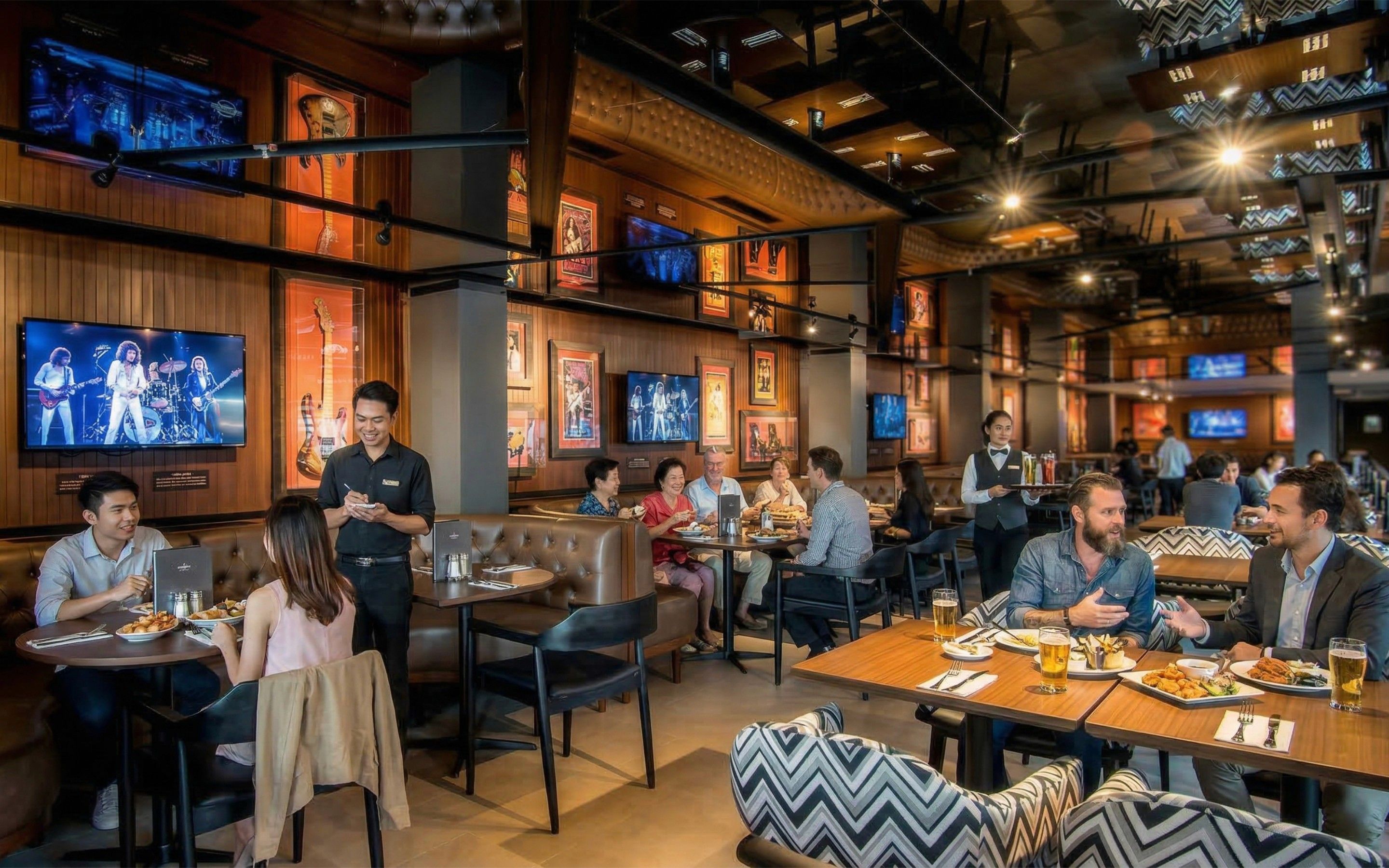
Daily life on Koh Samui is less about what you can do and more about what you naturally fall into doing.
The island has a way of narrowing routines — not from lack of options, but from rhythm.
Food, Groceries & Eating Habits
Most long-term residents split their food life into two lanes: local and imported.
Local markets and Thai restaurants are inexpensive and abundant. Fresh produce, seafood, and cooked meals are easy to source, especially in Maenam, Lamai, and Nathon. Eating Thai most days keeps costs low and routines simple.
Imported food is where budgets stretch. Supermarkets like Tops Food Hall at Central Samui carry Western staples, but prices add up quickly. Many expats bulk-buy meat and dry goods from Makro, then use places like Maenam Morning Market or Lamai Fresh Food Market for produce and local staples. That split — market for daily life, Makro for bulk, Tops for homesick cravings — is one of the most consistent long-stay patterns on the island.
Over time, most people adjust — not because they have to, but because it feels more aligned with island living.
Cafés, Workdays & Routine
Samui is quietly very workable for remote life.
Fast fiber internet is standard in most long-term rentals, and cafés across Bophut, Maenam, and Lamai cater naturally to laptops without trying to brand themselves as coworking spaces. In practice, people build routines around specific places: Flow, SUMMER by Coco Tam’s, and Bar Baguette for café mornings, then Desk+Chair when they need proper desks, aircon, and deep-work conditions. Mornings tend to be productive, afternoons slower, and evenings deliberately calm — especially for those working across time zones.
People who thrive here usually build firm routines early. Without structure, days blur quickly.
Fitness & Wellness
Fitness culture is strong and practical. Gyms are affordable, plentiful, and well-equipped. Lamai is particularly known for its fitness scene, while yoga, pilates, and wellness classes are spread across the island.
Outdoor activity becomes part of daily life almost by accident — beach walks, swimming, paddling, or simply moving more because the environment invites it.
Evenings & Social Rhythm
Evenings on Samui are generally early and understated outside of Chaweng. Dinner with friends, sunset drinks, night markets, or quiet nights at home are the norm. Big nights out happen — just not constantly.
This suits long-term residents far more than visitors expect.
The Adjustment Curve
Most people go through the same arc: excitement, over-activity, then simplification. What remains is a routine that feels lighter than city life but still anchored by necessities.
Those who resist routine often feel restless. Those who embrace it usually stay longer than planned.
Eating out
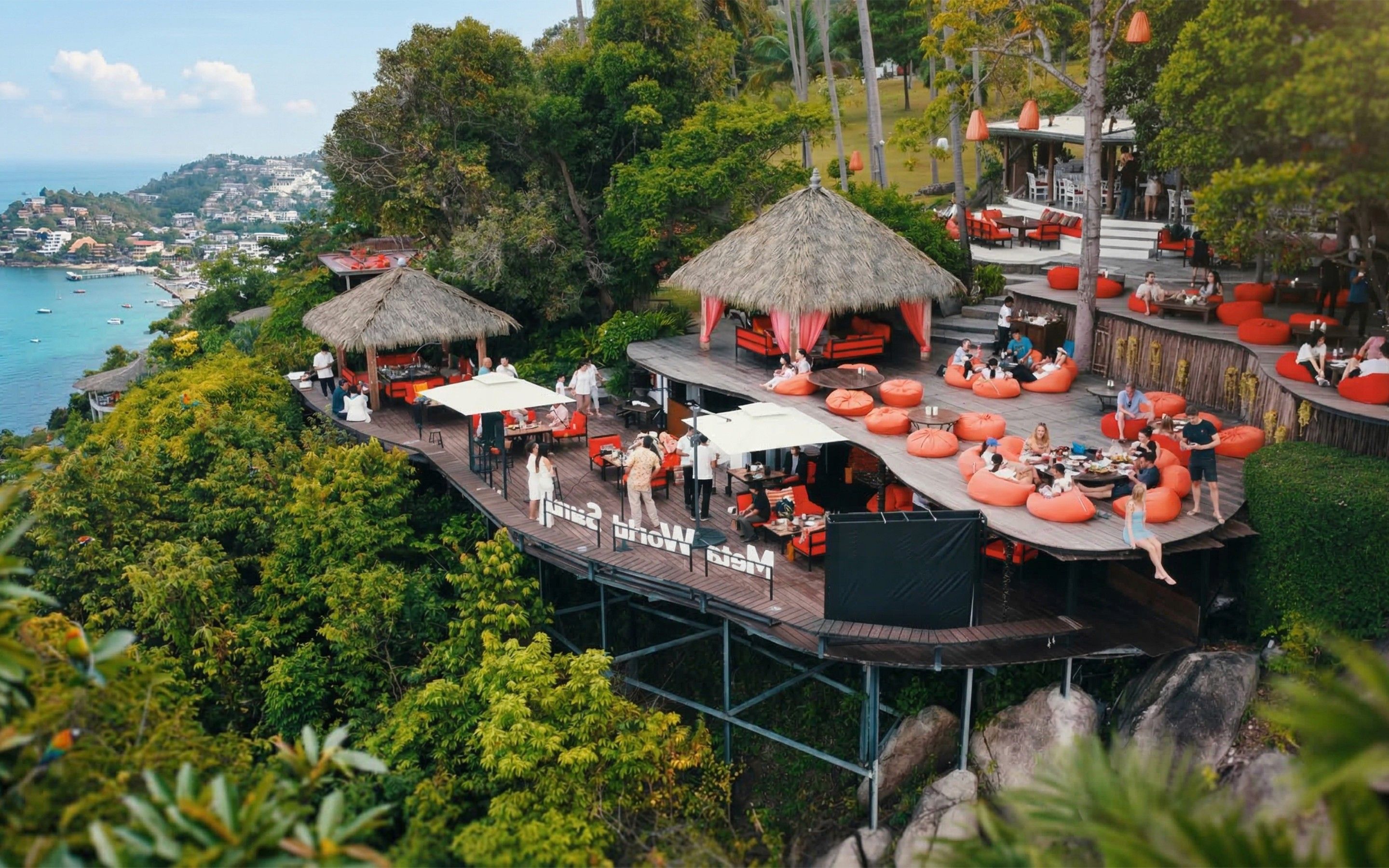
Krua Bophut
This is one of those places that doesn’t need hype — it survives purely on repeat business.
It’s right near Fisherman’s Village, but it doesn’t feel like a tourist trap. It’s where expats take visiting friends when they want to say, “This is what Thai food is actually meant to taste like.” Big open-air space, relaxed pace, no rush to turn tables.
Insider tip:
Order the whole steamed fish with lime and garlic, and don’t rush it. Pair it with a cold Singha and rice — it’s one of those meals where everyone goes quiet for a minute. Also, if you’re ordering spicy, tell them “Thai spicy, but not angry Thai” — they’ll get it.
Why it’s legendary for expats:
It’s consistent. You can bring first-timers or hardened Thailand lifers and nobody leaves disappointed.
The Jungle Club (for dinner, not just the view)
Yes, everyone talks about the view — but expats don’t keep going back just for that.
This is a late-afternoon into sunset place. You go up while it’s still light, order properly, and let the island slow down around you. It’s one of the few spots where locals, expats, couples, and solo travelers all overlap without it feeling awkward.
Insider tip:
Skip the obvious cocktails and order a classic mojito or a gin & tonic — they’re stronger, cleaner, and better value. Food-wise, the massaman curry or slow-cooked pork dishes are safer than the Western menu items.
Why it’s legendary for expats:
It resets your head. People go here when Samui feels busy or messy and they need perspective again.
Getting Around (The Samui Reality)
Getting around Koh Samui is one of the clearest dividing lines between people who enjoy living here and those who quietly struggle.
This is not an island where transport fades into the background.
Scooters, Cars & Daily Movement
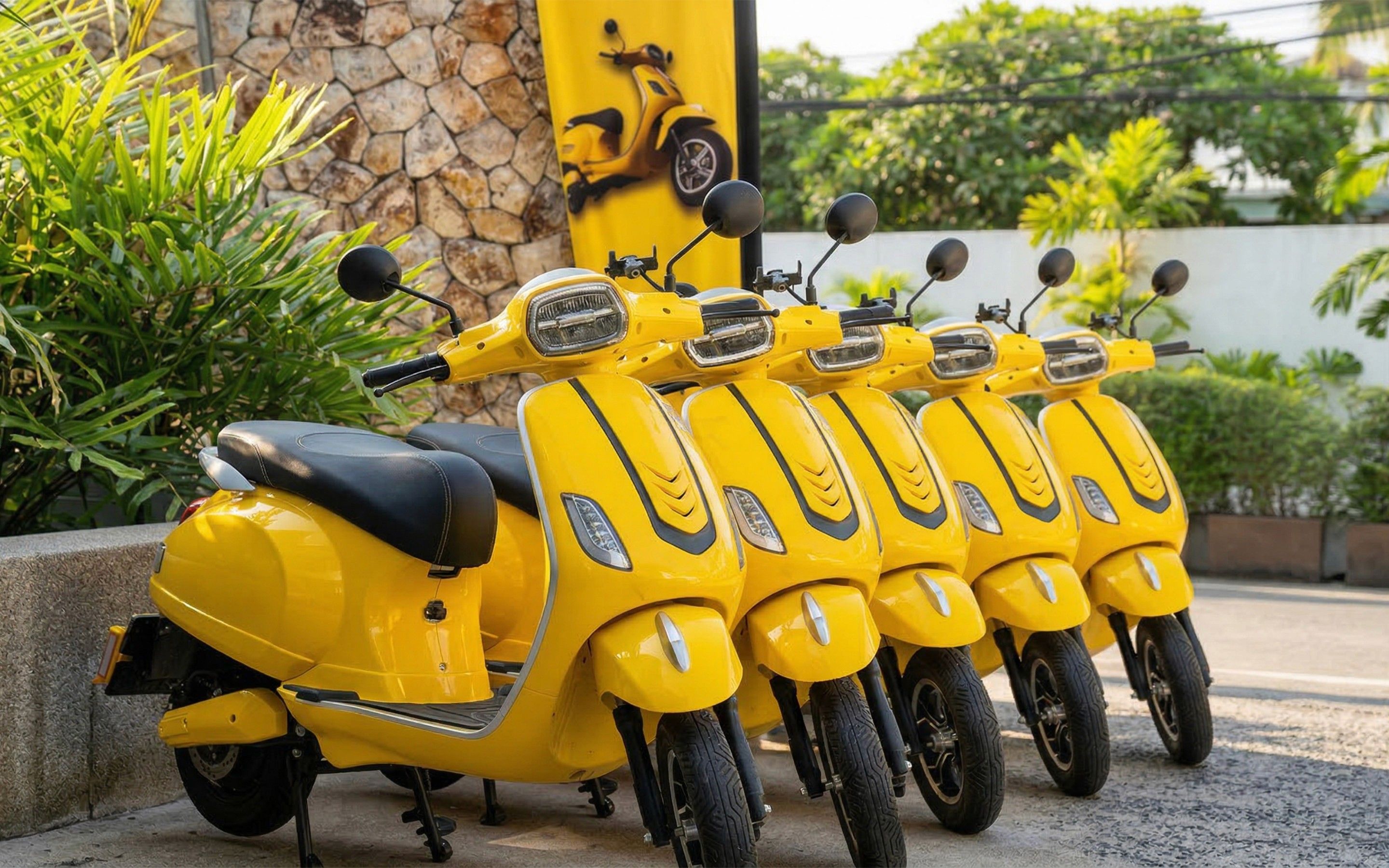
For most long-term residents, a scooter or car is essential. Distances aren’t huge, but public transport is limited and unreliable. Having your own vehicle turns Samui from restrictive to manageable.
Scooters are the default choice — inexpensive, flexible, and fast — but they come with real risk. Roads can be slippery, traffic is inconsistent, and accidents are common. Many long-term expats eventually move to a car for safety and comfort, especially during the rainy season.
Taxis, Grab & Reality
Taxis on Samui are expensive and often inconsistent. Coverage varies by area and time of day, and airport pricing is a frequent frustration.
Grab and Bolt exist and can work in some zones, but they’re not something you can rely on universally. Availability drops quickly outside main areas or during peak times.
If you plan to live here without driving, your world will shrink — and your costs will rise.
Songthaews & Local Transport
Songthaews (shared pickup trucks) operate mainly around tourist corridors. They’re cheap, but slow, limited, and rarely practical for day-to-day expat life.
Most long-term residents stop using them entirely.
Road & Seasonal Considerations
Traffic builds quickly in high season, particularly on the ring road between Fisherman’s Village and Chaweng. During heavy rain, flooding can temporarily cut routes, especially in Lamai and other low-lying areas.
Driving here requires patience and defensive habits.
Bottom Line
Samui is easy to navigate once you accept responsibility for your own transport. Those who do tend to adapt quickly. Those who don’t often feel trapped.
Before committing long-term, it’s worth asking a simple question:
Am I comfortable driving here every day?